Skip to content
the autism kit
Guide

How does a visual timer help an autistic child?

Making time visible for waiting, transitions and tasks, which timers work, and how to introduce one.

By The Autism Kit teamUpdated Sep 28, 2026 · 1 min read
Listen to this articleAbout 1 min
Read aloud · speed
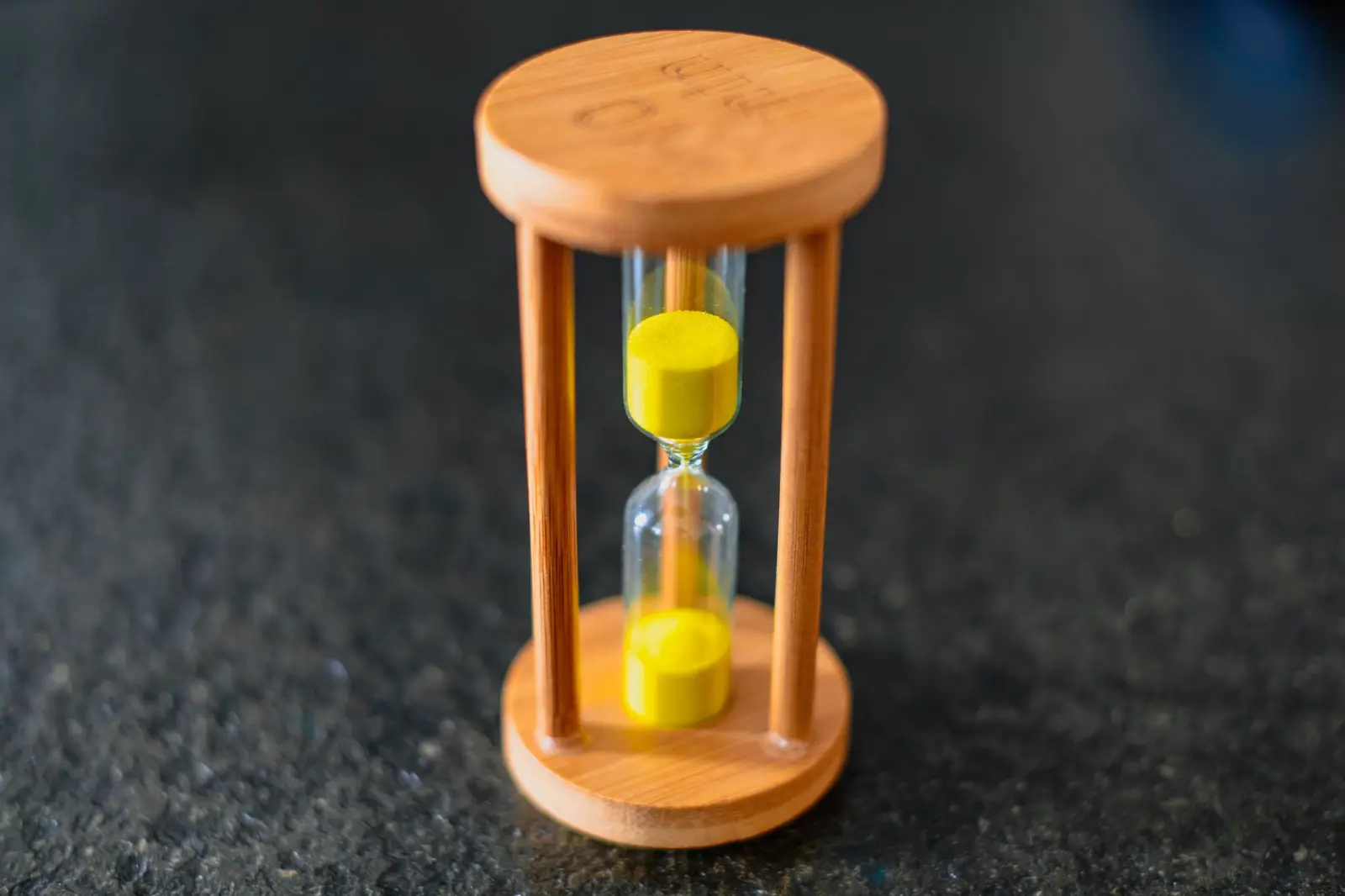
A wooden hourglass with yellow sand
Photo: Suki Lee on Pexels
The short answer

"Five minutes" means little to many young children, but a shrinking coloured disc or falling sand shows exactly how much time is left. Visual timers help with waiting, transitions and staying with a task. Start with short, positive uses ("when the timer ends, it's your turn"), keep the timer in view, and always follow through when it ends.

Key takeaways
  • Visual timers make time visible.
  • Use them for waiting, transitions and tasks.
  • Start with timers that end in something good.
  • Always follow through when it ends.

Why do visual timers help?

Time is abstract. A visual timer turns it into something your child can see shrink, which makes waiting and changes more predictable.12

Which timers work?

Types of visual timers
TypeGood forWatch out for
Sand timerShort waits, toothbrushingFixed times only
Disc timerShowing time left at a glanceSome have loud alarms
Timer appAny length, easy to carryScreen may distract
Token countdownWaiting in stepsNeeds an adult to move tokens

How do I introduce one?

  1. Start with a good ending: "When the timer ends, your turn."
  2. Keep it in view.
  3. Say what happens: "Timer ends, then bath."
  4. Follow through every time.
  5. Build up the time slowly.
Free printable: waiting cardPDF · 1 page · count down the wait with tokens
Download Free printable: waiting card

What can I try this week?

0 of 3 done

Read next: How do I get my autistic child to leave the park?

Common questions

Sand timers, disc timers (a red area that shrinks) and timer apps all work. Choose one without a harsh alarm if sound bothers your child.

Sources

  1. AFIRM (UNC Frank Porter Graham): Visual supports evidence-based practice brief. afirm.fpg.unc.edu
  2. NHS: Supporting an autistic child. nhs.uk

This guide shares general information and our team's perspective, based on the sources above. Every child is different, so please talk with your child's doctor or care team about what's right for your family. How we write our guides.

Was this guide helpful?
Share this guide with someone who'd find it useful
Listen

One small, useful tip a week

Practical ideas built on evidence-based practices, plus a free printable to start. Unsubscribe anytime.

We never sell or share your email.