Skip to content
the autism kit
Guide

How do I give my autistic child a haircut without a meltdown?

Preparing with pictures, choosing the right time and place, quieter tools, and cutting hair at home.

By The Autism Kit teamUpdated Sep 28, 2026 · 1 min read
Listen to this articleAbout 1 min
Read aloud · speed
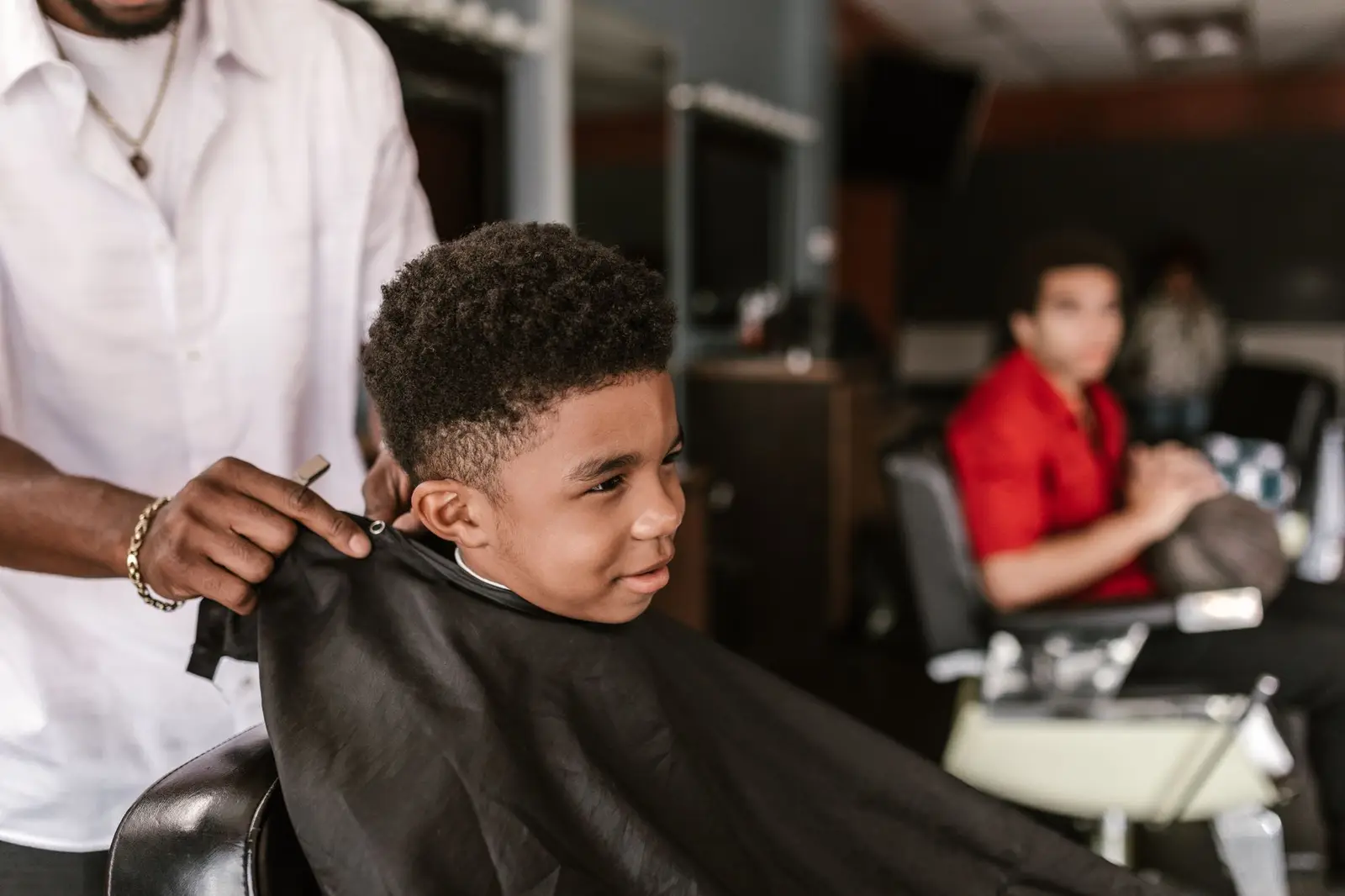
A barber putting a cape on a smiling boy in a barbershop
Photo: RDNE Stock project on Pexels
The short answer

Haircuts combine several sensory challenges: buzzing clippers, itchy hair, a cape, a stranger touching the head and sitting still. Prepare with a short social story and photos, book a quiet time, bring headphones and a favourite distraction, and show the steps (cape, spray, cut, brush, done) with a count or timer. Scissors are often easier than clippers. Short, successful cuts build trust.

Key takeaways
  • Prepare with a social story and photos.
  • Book a quiet time, or cut at home.
  • Scissors are often easier than clippers.
  • Show the steps and count so the end is clear.

Why are haircuts so hard?

Buzzing clippers, cut hair on the skin, a tight cape, water spray, the smell of products and someone touching the head all happen at once, and the child often doesn't know when it ends.

How do I prepare my child?

  1. Write a short social story with photos of the salon or your bathroom.1
  2. Show picture steps: cape, spray, cut, brush, done.2
  3. Practise at home with a comb and spray bottle.
  4. Visit the salon just to look, if you're going out.

What helps on the day?

Try
  • The first or last appointment of the day
  • Headphones and a tablet or favourite toy
  • Counting to 10 for each section
  • A towel or loose cape instead of a tight one
Skip
  • Surprise clippers
  • Holding your child down
  • Long cuts with no breaks
Free printable: social narrative templatePDF · 1 page · a simple story to prepare for a new or hard situation
Download Free printable: social narrative template

What can I try this week?

0 of 3 done

Read next: How do dentists, doctors and hairdressers make visits autism friendly?

Common questions

Many families do. Home is familiar and you can stop any time. Cutting during bath or while your child watches a favourite show can help.

Sources

  1. Carol Gray Social Stories. carolgraysocialstories.com
  2. AFIRM (UNC Frank Porter Graham): Visual supports evidence-based practice brief. afirm.fpg.unc.edu

This guide shares general information and our team's perspective, based on the sources above. Every child is different, so please talk with your child's doctor or care team about what's right for your family. How we write our guides.

Was this guide helpful?
Share this guide with someone who'd find it useful
Listen

One small, useful tip a week

Practical ideas built on evidence-based practices, plus a free printable to start. Unsubscribe anytime.

We never sell or share your email.