Skip to content
the autism kit
Guide

How can I make bath time easier for my autistic child?

Sensory tweaks for water, sound and temperature, a picture routine, and a clear start and end.

By The Autism Kit teamUpdated Sep 28, 2026 · 1 min read
Listen to this articleAbout 1 min
Read aloud · speed
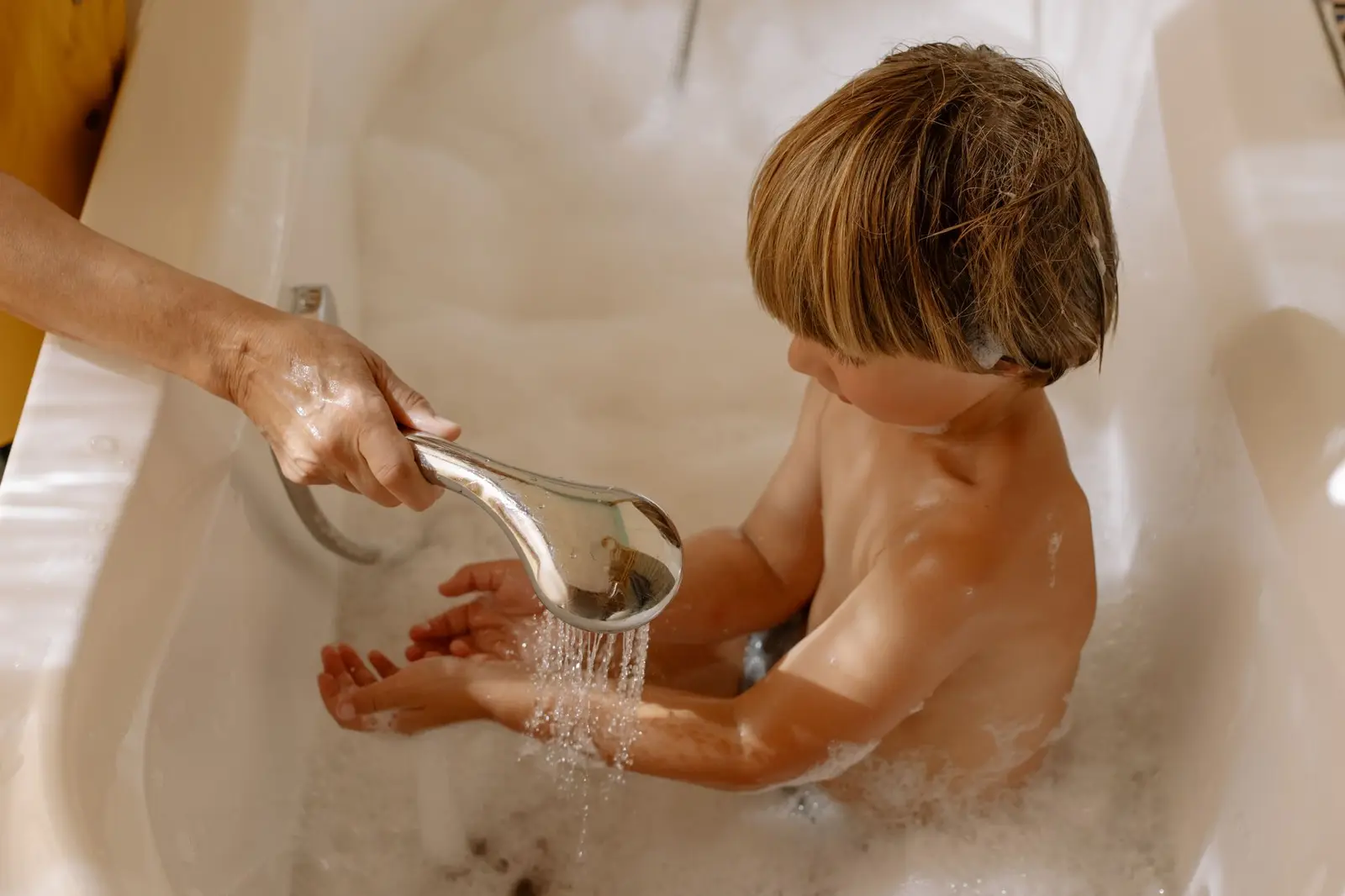
A young boy in a bubble bath while a parent rinses his hands with the shower head
Photo: cottonbro studio on Pexels
The short answer

Bath time can be hard because of water temperature, splashing, echoing sound, bright light and not knowing when it ends. Keep the temperature the same each time, lower the lights and noise, use picture steps (in, wash, rinse, out, towel), and a timer so the end is clear. If baths are too much, a quick shower or a wash cloth at the sink is fine for now.

Key takeaways
  • Keep the temperature the same every time.
  • Lower lights and noise.
  • Use picture steps and a timer.
  • A quick wash is fine on hard days.

Why can bath time be so hard?

Water on skin, changes in temperature, echoing bathrooms, the drain sound and bright lights can all be overwhelming. Not knowing how long it will last makes it worse.2

What sensory changes help?

Try
  • A bath thermometer so it feels the same each time
  • Dimmer lights or a lamp outside the door
  • A cup or washcloth instead of the shower head
  • Draining the water after your child leaves
Skip
  • Surprise water on the face
  • Rushing
  • Very hot or cold rooms

What routine works?

  1. Show picture steps: in, play, wash, rinse, out, towel.1
  2. Set a timer your child can see.
  3. Warn before each step: "Now we rinse your arms."
  4. Have a warm towel ready.
  5. First bath, then a favourite toy or story.
Free first-then printablePDF · 1 page · two large picture slots
Download Free first-then printable

What can I try this week?

0 of 3 done

Common questions

No. Many families bathe young children a few times a week. A wash cloth works on other days.

Sources

  1. AFIRM (UNC Frank Porter Graham): Visual supports evidence-based practice brief. afirm.fpg.unc.edu
  2. NHS: Supporting an autistic child. nhs.uk

This guide shares general information and our team's perspective, based on the sources above. Every child is different, so please talk with your child's doctor or care team about what's right for your family. How we write our guides.

Was this guide helpful?
Share this guide with someone who'd find it useful
Listen

One small, useful tip a week

Practical ideas built on evidence-based practices, plus a free printable to start. Unsubscribe anytime.

We never sell or share your email.