- OT helps with everyday skills: dressing, eating, washing, writing and play.
- It often covers sensory needs, like noise, textures and movement.
- Good OT is play-based and gives you ideas for home.
- You can get OT through early intervention, school or a doctor's referral.
What does an occupational therapist do?
In OT, "occupations" are the everyday activities that fill a day. For a child, that means playing, eating, getting dressed, using the toilet, learning at school and sleeping.1
An occupational therapist looks at what's getting in the way of those activities and helps your child build skills, or changes the task or environment so it's easier. OT is one of the supports the NIH lists for autistic children.2
How can OT help an autistic child?
Common goals include:
- Self-care: dressing, buttons and zippers, brushing teeth, using utensils
- Fine motor skills: holding a pencil, cutting with scissors, building
- Sensory needs: handling noise, clothing, food textures or haircuts, or finding safe ways to get movement
- Regulation: noticing big feelings and using tools that help the body calm down
- Play and routines: joining play, following steps, and handling transitions
Sensory differences are part of how autism is diagnosed, so this is often a big part of OT for autistic kids.3 See What is sensory overload?
What happens in an OT session?
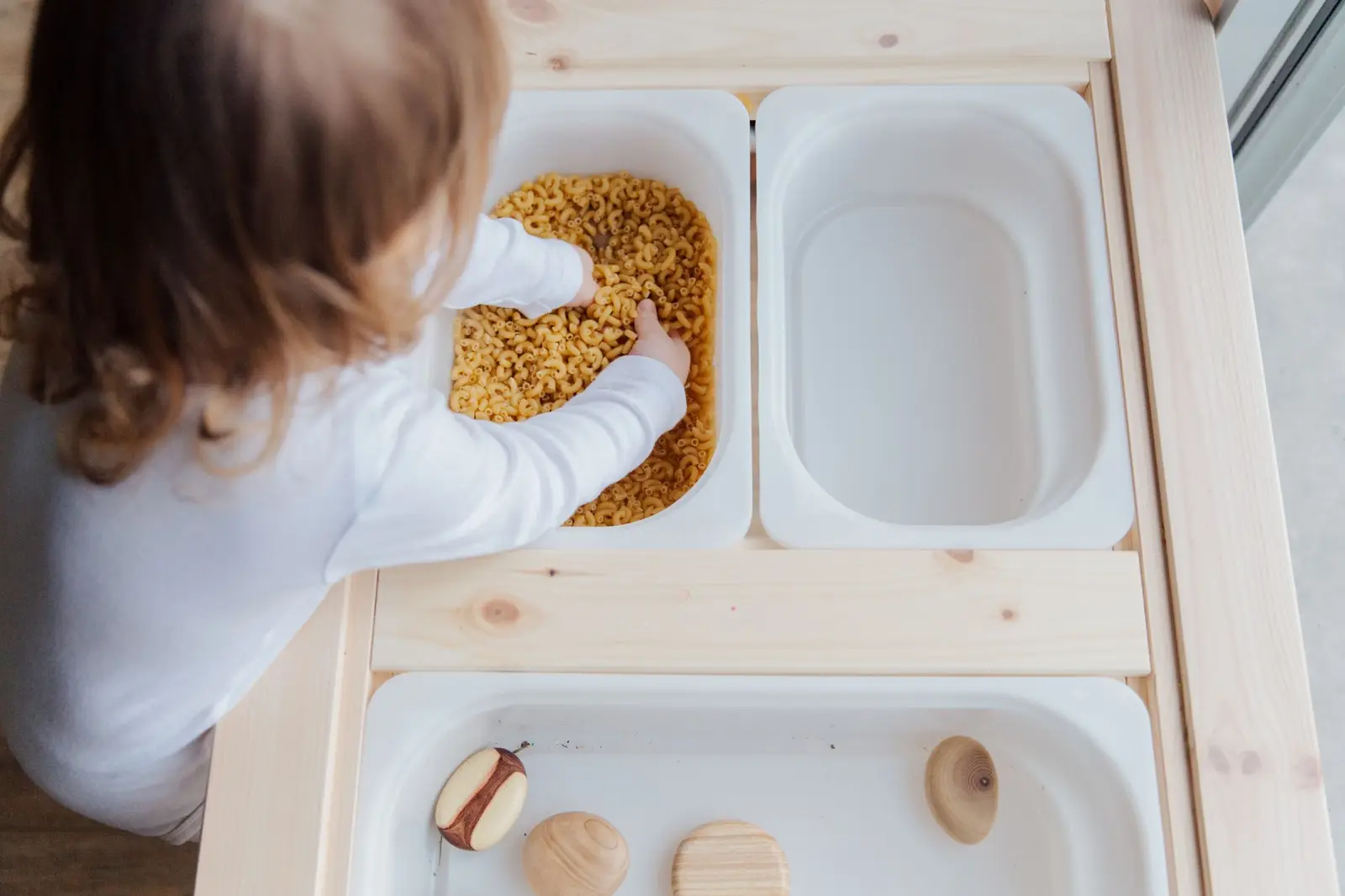
Sessions usually look like play. Your child might swing, climb, dig through a sensory bin, play with putty, practice buttons on a doll or work on a craft. The OT is watching how your child moves, focuses and reacts, and adjusting the challenge.
How do I know if my child needs OT?
OT may help if:
- Dressing, eating or toileting is much harder than for other kids the same age
- Your child reacts strongly to clothes, noise, food or grooming
- Handwriting or using scissors is very frustrating
- Your child seeks lots of crashing, spinning or chewing
You don't need a diagnosis to ask for an OT evaluation.
How do I find an occupational therapist?
- Under 3: ask your state's early intervention program for an evaluation.
- 3 and older: ask your school district. OT can be part of an IEP. See What is an IEP?
- Private OT: ask your pediatrician for a referral and check your insurance.
What can I try at home?
0 of 4 done
For the bigger picture, read What therapies and supports help autistic kids?