- First: a short, clear task. Then: something your child wants.
- Give the 'then' straight away.
- Use photos of your child's real things.
- Start with one or two hard moments.
What are good first-then examples?
| Time of day | First | Then |
|---|---|---|
| Morning | Get dressed | Breakfast |
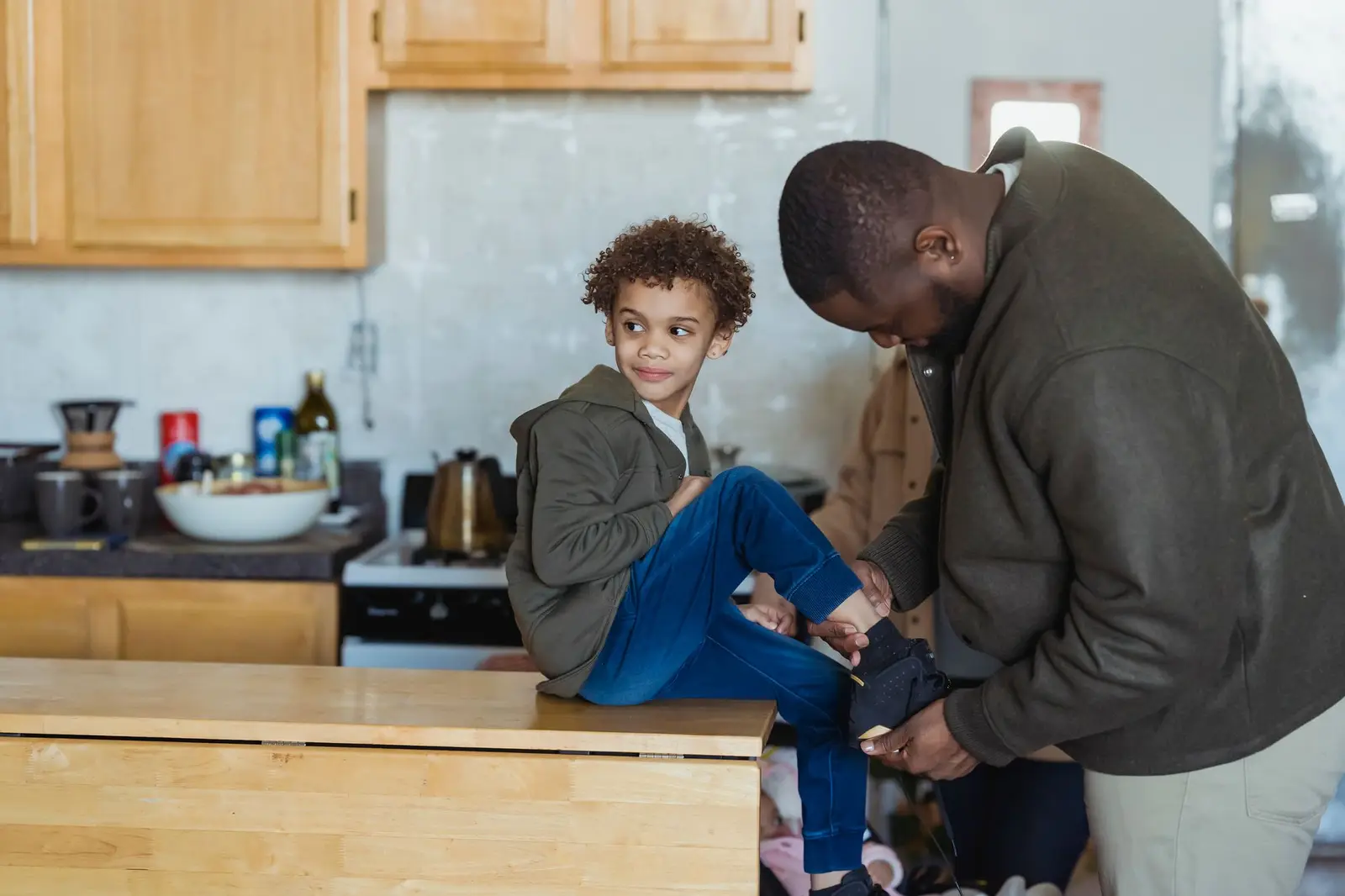
| Morning | Shoes on | Car |
| Morning | Brush teeth | Favourite song |
| Meals | Wash hands | Snack |
| Meals | Sit at table | Choose a drink |
| Meals | One bite of new food | Favourite food |
| Bath | Hair wash | Bath toy |
| Bath | Bath | iPad |
| Bedtime | Pajamas | Story |
| Bedtime | Toilet | Cuddle |
| Outings | Car seat | Snack |
| Outings | Shop | Park |
| Outings | Doctor | Sticker |
| Outings | Haircut | Playground |
| Home | Tidy up | Bubbles |
| Home | Homework | Screen time |
| Home | Put on coat | Go outside |
| School | Circle time | Blocks |
| School | Work | Break |
| School | Line up | Recess |
First-then boards combine visual supports and reinforcement, both evidence-based practices.12
How do I pick a 'then' that works?
Try
- Something your child picks
- Short activities
- Giving it right away
Skip
- A 'then' that happens hours later
- Changing the 'then' after the 'first'
- Long 'first' tasks at the start
Free first-then printablePDF · 1 page · two large picture slots
Download Free first-then printableWhat can I try this week?
0 of 3 done
Read next: How do first-then boards work?