Skip to content
the autism kit
Guide

What does "masking" mean for autistic kids, and why does it matter?

Why some autistic kids hold it together all day, fall apart at home, and what helps them feel safe to be themselves.

By The Autism Kit teamUpdated Sep 27, 2026 · 2 min read
Listen to this articleAbout 2 min
Read aloud · speed
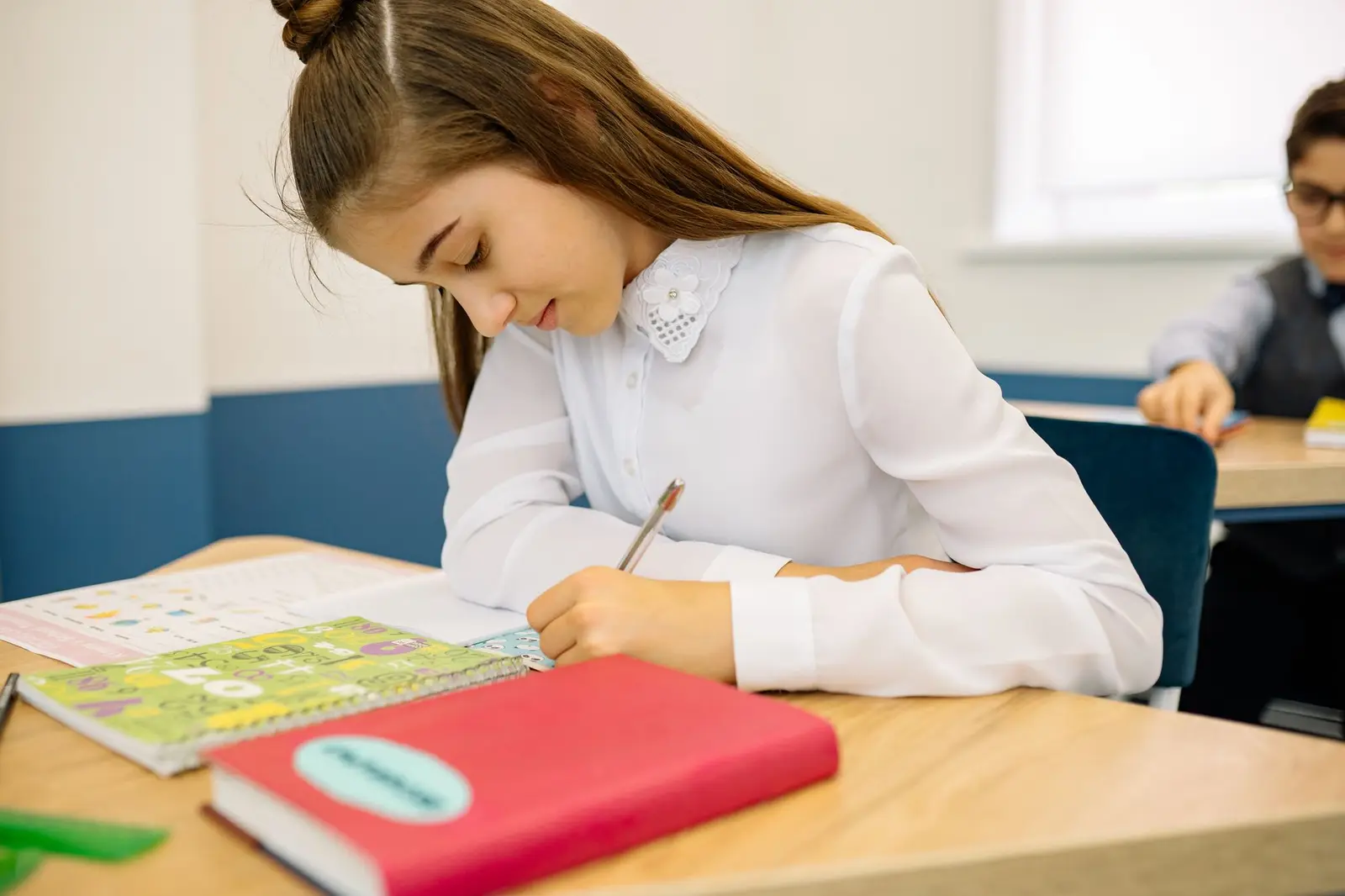
A girl concentrating on her writing in a classroom
Photo: Yan Krukau on Pexels
The short answer

Masking, also called camouflaging, is when an autistic person hides autistic traits or copies others to fit in, such as forcing eye contact, rehearsing phrases or holding in the need to move. Many kids mask at school and then have big feelings at home. Masking takes a lot of energy, so kids need safe places where they don't have to.

Key takeaways
  • Masking means hiding autistic traits or copying others to fit in.
  • It's tiring. Many kids hold it together at school, then fall apart at home.
  • It can hide autism, so some kids are diagnosed later.
  • Kids need safe places where they don't have to mask.

What is masking?

Masking, sometimes called camouflaging, is when an autistic person hides their natural ways of moving, talking or reacting so they fit in. Autistic adults describe things like:1

  • Forcing eye contact, even when it's uncomfortable
  • Copying other people's facial expressions, jokes or tone
  • Rehearsing what to say before a conversation
  • Holding in the urge to move, flap or fidget
  • Hiding strong reactions to noise, light or textures

Kids may not have words for it. You might just notice a child who seems "fine" to teachers but very different at home.

Why do autistic kids mask?

Usually to avoid standing out, being teased or getting in trouble. Kids learn quickly which behaviors get stares. Some mask on purpose; others do it without realizing.

Masking can be harder to spot in girls, and it's one reason autistic girls are often diagnosed later than boys.2 See How does autism show up in girls?

Why does masking matter?

Masking takes a lot of mental energy. In one study, autistic adults described it as exhausting and said it could affect their sense of who they are.1

For kids, it often shows up as after-school collapse: tears, anger or shutting down as soon as they get home. It's not a sign that school is going fine and home is the problem. It's a sign your child spent their energy holding it together.

How can I help my child mask less?

Try
  • A quiet, low-demand hour after school
  • Letting your child stim, move and be themselves at home
  • Asking school about breaks, a calm space or movement
  • Telling your child which traits you love about them
Skip
  • Asking lots of questions right after school
  • Praising your child for "looking normal"
  • Telling them to stop harmless movements
  • Assuming a calm day at school means no support is needed

When should I ask for more help?

Free printable: calm-down cardPDF · 1 page · pick 2 or 3 things that help
Download Free printable: calm-down card

What can I try this week?

0 of 4 done
Common questions

Not always. Everyone adjusts a little in public. It becomes a problem when a child has to hide who they are most of the day, which is exhausting and can affect mood.

Sources

  1. Hull L, et al. "Putting on my best normal": social camouflaging in adults with autism spectrum conditions. Journal of Autism and Developmental Disorders, 2017. doi.org
  2. Loomes R, Hull L, Mandy WPL. What is the male-to-female ratio in autism spectrum disorder? A systematic review and meta-analysis. JAACAP, 2017. doi.org
  3. Kapp SK, et al. 'People should be allowed to do what they like': autistic adults' views and experiences of stimming. Autism, 2019. doi.org

This guide shares general information and our team's perspective, based on the sources above. Every child is different, so please talk with your child's doctor or care team about what's right for your family. How we write our guides.

Was this guide helpful?
Share this guide with someone who'd find it useful
Listen

One small, useful tip a week

Practical ideas built on evidence-based practices, plus a free printable to start. Unsubscribe anytime.

We never sell or share your email.