Skip to content
the autism kit
Guide

Will my autistic child learn to talk?

What research says about speech in autistic kids, why pictures and devices help rather than hold kids back, and what to try now.

By The Autism Kit teamUpdated Sep 27, 2026 · 2 min read
Listen to this articleAbout 2 min
Read aloud · speed
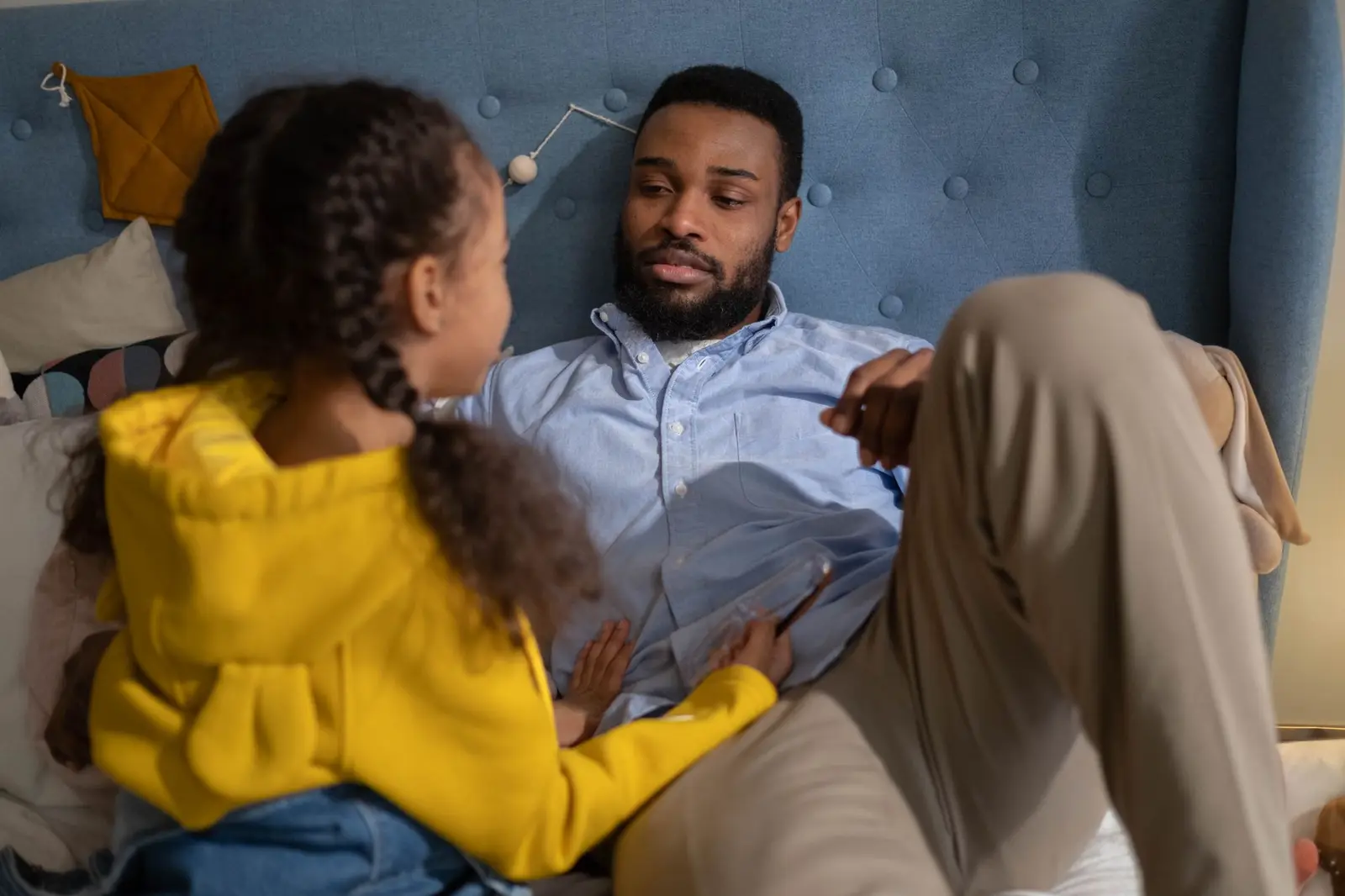
A father and daughter talking together in a cozy bedroom
Photo: cottonbro studio on Pexels
The short answer

Many do, often later than other kids. In one large study of autistic children who weren't using phrases at age 4, about 7 in 10 were using phrases by age 8, and nearly half were speaking fluently. Some children communicate best without speech, using pictures, signs or a device. Research shows these tools don't stop speech and can help it grow.

Key takeaways
  • Many autistic kids learn to talk, often later than other kids.
  • In one study, about 7 in 10 kids without phrases at 4 were using phrases by 8.
  • Pictures, signs and devices (AAC) help. They don't stop speech.
  • Every child can communicate. Speech is one way, not the only way.

Do autistic kids learn to talk?

Many do. Autistic children often start talking later, and some take a long time. A study of more than 500 autistic children who weren't yet using phrases at age 4 found that by age 8:1

  • About 70% were using phrases
  • About 47% were speaking fluently

The children who were more likely to develop speech tended to have stronger nonverbal skills, like problem solving, and fewer social communication difficulties.1

Some autistic people stay nonspeaking or use very few words all their lives. Many of them understand a great deal and communicate well in other ways.

Will pictures or a speech device stop my child from talking?

No. This is one of the most common worries, and research has looked at it closely. A review of studies found that AAC (augmentative and alternative communication) did not reduce speech, and in many cases speech increased after AAC was introduced.2

AAC includes:3

  • Picture cards and choice boards
  • Signs and gestures
  • Speech-generating devices and apps on a tablet

How can I help my child communicate?

Try
  • Offer two choices with pictures, and wait
  • Say the word as your child points: "Juice."
  • Talk about what your child is doing, in short phrases
  • Treat a point, a picture or a tap as a real answer
Skip
  • Holding back a snack until your child says the word
  • Long questions and lots of talking
  • Waiting for speech before trying pictures or AAC

Who can help?

A speech-language pathologist (SLP) can assess how your child understands and communicates, and suggest the right mix of speech and AAC.4 Children under 3 can be evaluated through early intervention, and older children through their school district.

Free printable: two-choice boardPDF · 2 pages · two picture slots, plus food cards
Download Free printable: two-choice board

What can I try this week?

0 of 4 done
Common questions

No. Research reviews have found AAC doesn't stop speech, and for some children it's followed by more speech. It gives your child a way to communicate right now.

Sources

  1. Wodka EL, Mathy P, Kalb L. Predictors of phrase and fluent speech in children with autism and severe language delay. Pediatrics, 2013. doi.org
  2. Millar DC, Light JC, Schlosser RW. The impact of augmentative and alternative communication intervention on the speech production of individuals with developmental disabilities: a research review. JSLHR, 2006. doi.org
  3. American Speech-Language-Hearing Association: Augmentative and alternative communication (AAC). asha.org
  4. NICHD (NIH): Speech-language therapy for autism. nichd.nih.gov

This guide shares general information and our team's perspective, based on the sources above. Every child is different, so please talk with your child's doctor or care team about what's right for your family. How we write our guides.

Was this guide helpful?
Share this guide with someone who'd find it useful
Listen

One small, useful tip a week

Practical ideas built on evidence-based practices, plus a free printable to start. Unsubscribe anytime.

We never sell or share your email.