Skip to content
the autism kit
Guide

How do paraprofessionals and teaching assistants support autistic students?

What the role involves, core skills, how to support independence rather than dependence, and where to get training.

By The Autism Kit teamUpdated Sep 27, 2026 · 1 min read
Listen to this articleAbout 1 min
Read aloud · speed
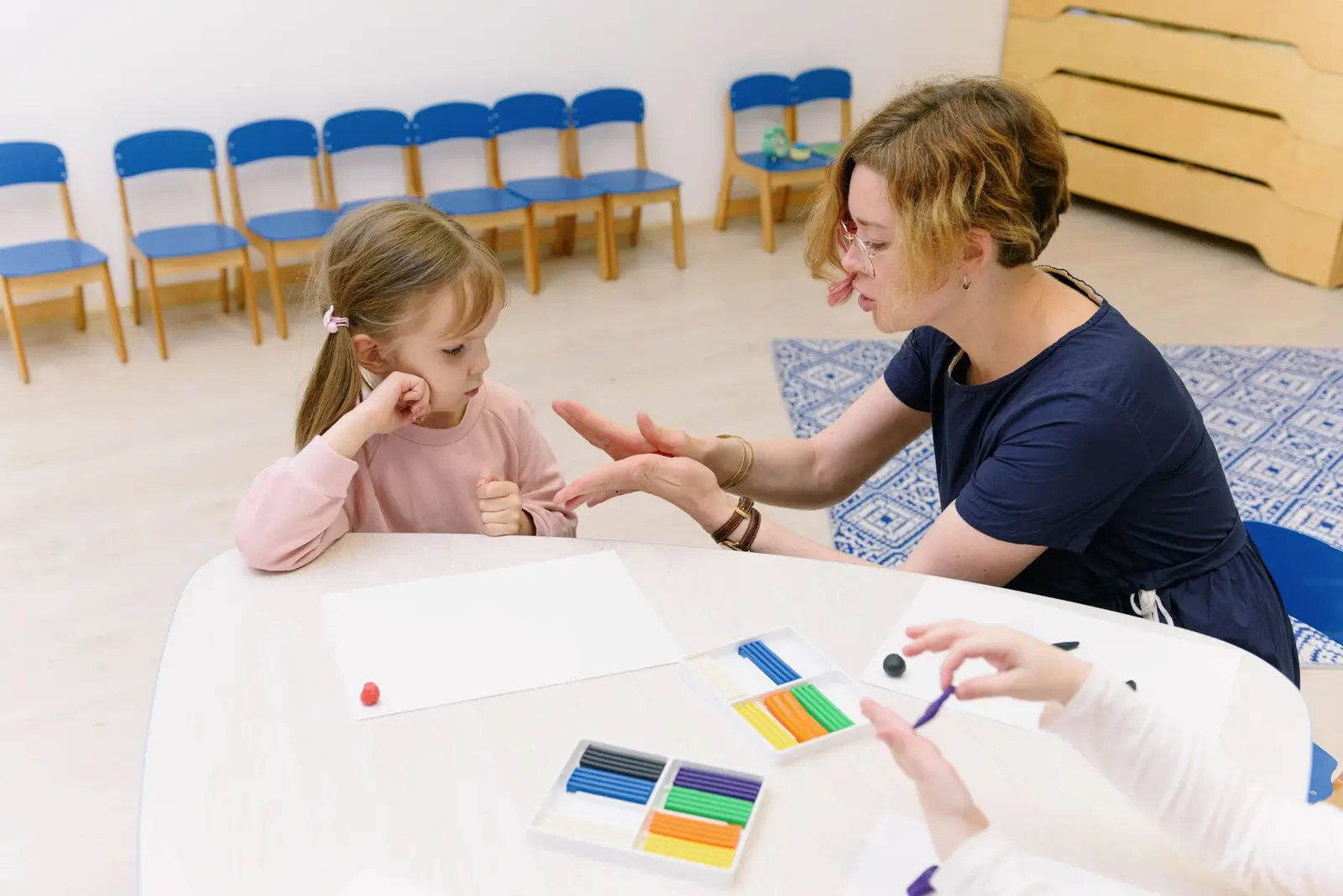
A teacher helping a young girl with a clay activity at a classroom table
Photo: Ksenia Chernaya on Pexels
The short answer

Paraprofessionals and teaching assistants help autistic students take part in learning: using visual supports, giving just enough prompting, supporting communication and regulation, and collecting simple data. The best support builds independence, fading help over time, rather than an adult doing tasks for the student. They work under the teacher's direction and need training in core practices.

Key takeaways
  • Paras help students take part in learning, under the teacher's direction.
  • Core skills: visual supports, prompting and fading, communication, regulation.
  • Aim for independence, not dependence.
  • Training and feedback make the biggest difference.

What does the role involve?

  • Using visual schedules, first-then boards and choice boards
  • Prompting just enough, then fading help
  • Supporting communication, including AAC
  • Helping with regulation, breaks and the calm corner
  • Collecting simple data for the teacher
  • Supporting peer interaction

How do paras build independence?

Try
  • Prompting from behind or the side, not in front
  • Fading prompts as soon as the student succeeds
  • Stepping back during peer activities
  • Teaching the student to use their own schedule
Skip
  • Doing tasks for the student
  • Sitting right beside them all day
  • Speaking for the student

Where can paras get training?

  • Free AFIRM modules on evidence-based practices1
  • Free IRIS Center modules on supporting autistic students3
  • In-school coaching using explain, model, practise, feedback2

How can teachers support paras?

  1. Share each student's plan and goals.
  2. Model supports in class.
  3. Give quick, specific feedback.
  4. Meet regularly, even briefly.
Free printable: classroom packPDF · 8 pages · timetable, now and next, token board, calm corner, breaks, transitions, story and profile
Download Free printable: classroom pack

What can I do this week?

0 of 3 done

For teachers: How do special education teachers train paraprofessionals quickly?

Common questions

Requirements vary by state and school, and some federally funded roles have qualification requirements. Check your district.

Sources

  1. AFIRM (UNC Frank Porter Graham): Autism Focused Intervention Resources and Modules. afirm.fpg.unc.edu
  2. Parsons MB, Rollyson JH, Reid DH. Evidence-based staff training: a guide for practitioners. Behavior Analysis in Practice, 2012. doi.org
  3. IRIS Center, Vanderbilt University: Autism spectrum disorder modules. iris.peabody.vanderbilt.edu

This guide shares general information and our team's perspective, based on the sources above. Rules and services differ by country, region and school, so always check your local guidance and your organisation's policies. How we write our guides.

Was this guide helpful?
Share this guide with someone who'd find it useful
Listen

One small, useful tip a week

Practical ideas built on evidence-based practices, plus a free printable to start. Unsubscribe anytime.

We never sell or share your email.