Skip to content
the autism kit
Guide

How can schools include autistic students in general education?

What inclusion looks like day to day, universal supports, peer involvement, and planning with the IEP team.

By The Autism Kit teamUpdated Sep 27, 2026 · 1 min read
Listen to this articleAbout 1 min
Read aloud · speed
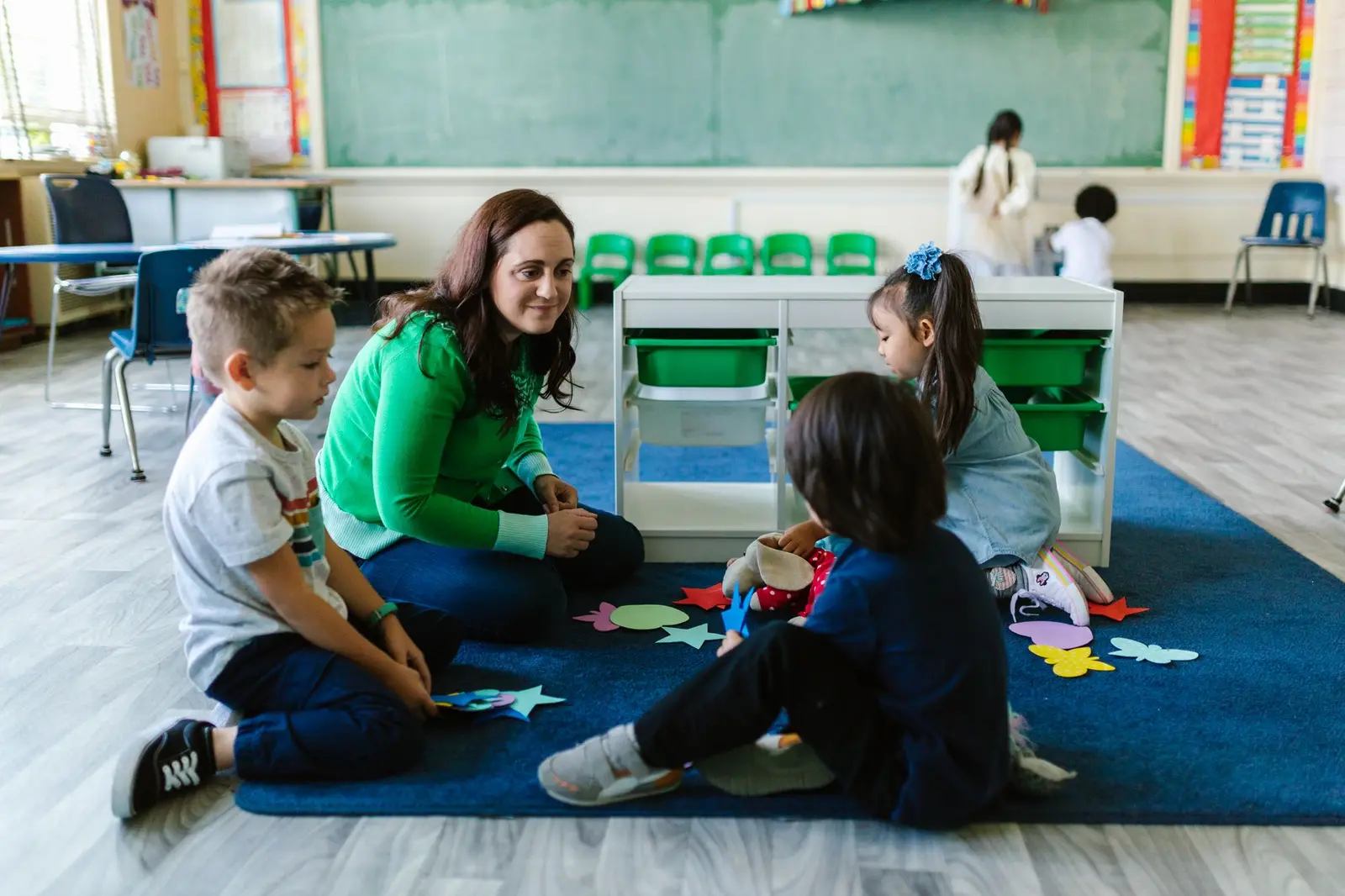
A teacher and a group of smiling children gathered around a table in a classroom
Photo: RDNE Stock project on Pexels
The short answer

Inclusion means autistic students learn alongside peers with the supports they need. It works best with universal supports that help everyone (visual schedules, clear routines, calm spaces), peer-based strategies, close collaboration between general and special education teachers, and IEP goals practised in the general classroom. IDEA requires education in the least restrictive environment appropriate for each student.

Key takeaways
  • Inclusion means learning alongside peers, with supports.
  • Universal supports help everyone.
  • Peers and collaboration make it work.
  • IDEA requires the least restrictive environment.

What does the law say?

IDEA requires that students with disabilities are educated with non-disabled peers to the maximum extent appropriate, with supplementary aids and services.1

What does good inclusion look like?

Inclusion in practice
AreaExamples
Universal supportsClass visual schedule, warnings before changes, calm corner
InstructionVisual instructions, choice of how to show learning
PeersStructured buddy activities, clubs based on interests
CollaborationRegular planning between general and special education
GoalsIEP goals practised during general class activities

Peer-based instruction is among the evidence-based practices identified for autistic students.2

How do teachers collaborate?

Try
  • A short weekly planning check-in
  • Shared visual supports across rooms
  • Clear roles for paraprofessionals
Skip
  • Inclusion without planning or support
  • Paras as the only link to the class
Free printable: classroom packPDF · 8 pages · timetable, now and next, token board, calm corner, breaks, transitions, story and profile
Download Free printable: classroom pack

What can I do this week?

0 of 3 done

Common questions

IDEA requires students with disabilities to be educated with non-disabled peers to the maximum extent appropriate, with supports, and removed only when needed.

Sources

  1. Legal Information Institute: 34 CFR § 300.114, least restrictive environment requirements. law.cornell.edu
  2. National Clearinghouse on Autism Evidence and Practice: Research and resources (peer-based instruction). ncaep.fpg.unc.edu
  3. IRIS Center, Vanderbilt University. iris.peabody.vanderbilt.edu

This guide shares general information and our team's perspective, based on the sources above. Rules and services differ by country, region and school, so always check your local guidance and your organisation's policies. How we write our guides.

Was this guide helpful?
Share this guide with someone who'd find it useful
Listen

One small, useful tip a week

Practical ideas built on evidence-based practices, plus a free printable to start. Unsubscribe anytime.

We never sell or share your email.