Skip to content
the autism kit
Guide

What should first responders know about autistic children?

Signs a child may be autistic, how to communicate, sensory considerations, wandering, and how families can prepare.

By The Autism Kit teamUpdated Sep 27, 2026 · 1 min read
Listen to this articleAbout 1 min
Read aloud · speed
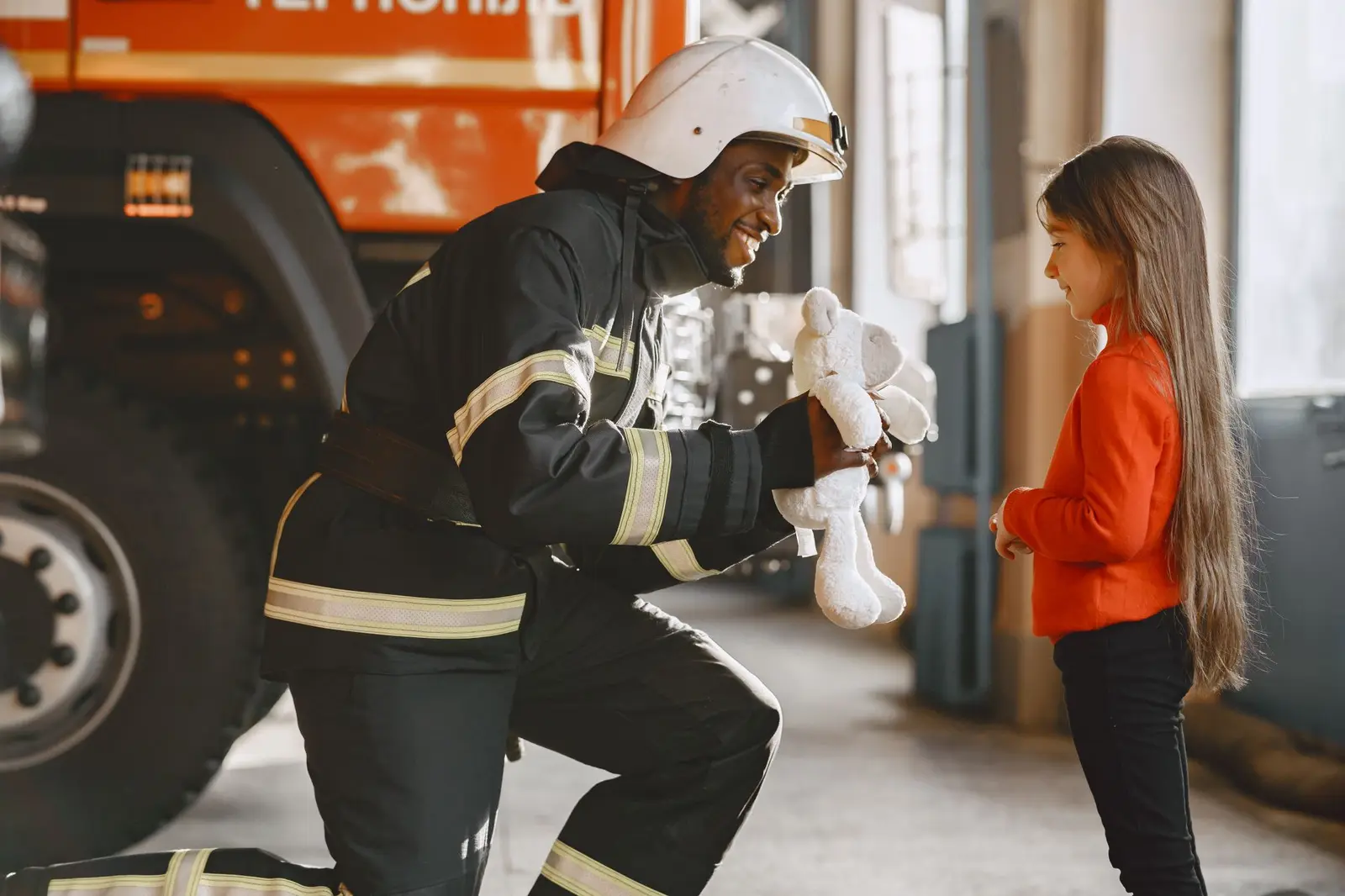
A firefighter kneeling to hand a soft toy to a young girl
Photo: Gustavo Fring on Pexels
The short answer

An autistic child in an emergency may not respond to their name, may not speak, may cover their ears or run, and may not understand danger. Approach calmly, reduce noise and lights where safe, use short, literal phrases, allow time to respond, and avoid touching without warning. Many autistic children wander, so check nearby water first. Families can share an information sheet in advance.

Key takeaways
  • An autistic child may not respond, not speak, or run.
  • Approach calmly; reduce noise and lights when safe.
  • Use short, literal phrases and allow time.
  • If a child is missing, check water first.

What signs might suggest a child is autistic?

Not responding to their name, limited or no speech, repeating words, covering ears, rocking or flapping, or distress at noise or touch. Signs vary widely.1

How should responders communicate?

Try
  • Calm voice, short literal phrases
  • Extra time to respond
  • Turning off sirens or lights when safe
  • Asking caregivers what helps
Skip
  • Touching without warning
  • Treating silence as refusal
  • Several people talking at once

Asking a parent or carer what helps is often the fastest way to calm a situation.

What about wandering?

In one large survey of families, about half of autistic children had tried to leave a safe place, and many were close to traffic or water.2 When a child is missing, check nearby water and places the child likes.

What can services do next?

0 of 3 done

Common questions

Communication differences, sensory overload or fear can make it hard to respond, even when a child hears and understands.

Sources

  1. CDC: Signs and symptoms of autism spectrum disorder. cdc.gov
  2. Anderson C, Law JK, Daniels A, et al. Occurrence and family impact of elopement in children with autism spectrum disorders. Pediatrics, 2012;130(5):870-877. doi.org

This guide shares general information and our team's perspective, based on the sources above. Rules and services differ by country, region and school, so always check your local guidance and your organisation's policies. How we write our guides.

Was this guide helpful?
Share this guide with someone who'd find it useful
Listen

One small, useful tip a week

Practical ideas built on evidence-based practices, plus a free printable to start. Unsubscribe anytime.

We never sell or share your email.