Skip to content
the autism kit
Guide

How can early childhood educators support autistic children?

Practical strategies for routines, play, communication and transitions in early learning services.

By The Autism Kit teamUpdated Sep 27, 2026 · 1 min read
Listen to this articleAbout 1 min
Read aloud · speed
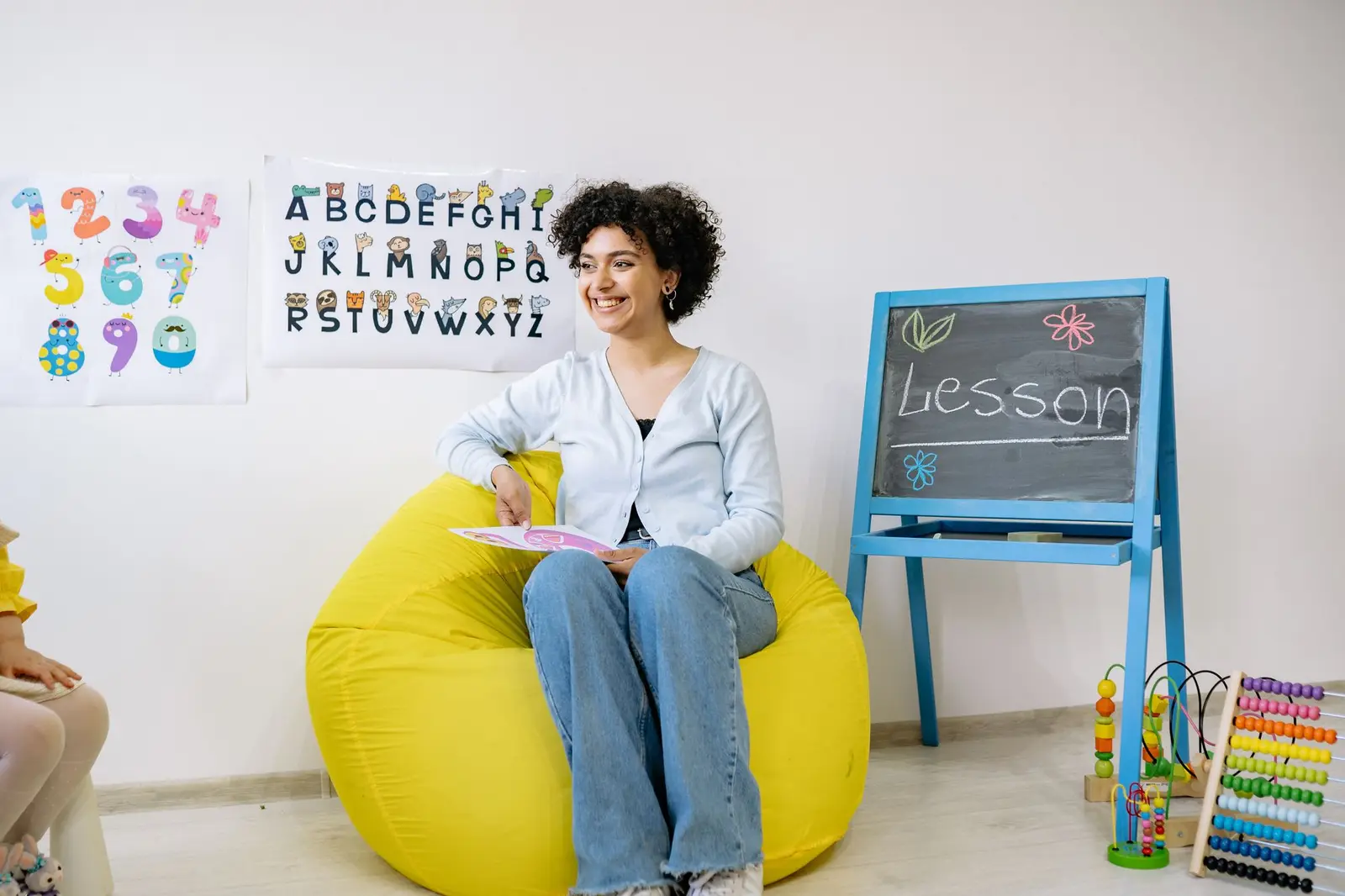
A smiling educator sitting on a beanbag holding a book in a preschool classroom
Photo: Yan Krukau on Pexels
The short answer

Early childhood educators can support autistic children by making the day predictable (visual routines and warnings before changes), following the child's interests in play, supporting all forms of communication, offering quiet spaces, and working closely with families. Most of these strategies help every child in the room, which makes them easy to build into everyday practice.

Key takeaways
  • Make the day predictable with pictures and warnings.
  • Follow the child's interests in play.
  • Value every form of communication.
  • Work with families and share what helps.

What helps autistic children in early learning?

  • Visual routines that show the order of the day, and what's now and next
  • Warnings before changes: "Two more minutes, then pack away"
  • A quiet space children can choose to use
  • Choices with pictures instead of open questions
  • Following interests: joining a child's play and building on it

Visual supports are an evidence-based practice from early childhood onwards.3

How does this fit with the EYLF?

The Early Years Learning Framework (V2.0) emphasises inclusion, high expectations and equity, and partnerships with families.2 Visual routines, responsive play and close work with families put those principles into practice for autistic children.

How can I support communication?

Try
  • Short, clear sentences with gestures or pictures
  • Waiting longer for a response
  • Treating pointing, pictures and devices as real communication
  • Modelling words during play
Skip
  • Insisting on eye contact
  • Long verbal instructions
  • Holding back items until a child says a word

How do I help with transitions?

Use a now-and-next board, a timer, a transition song or a "finished" card. Give the child a job during transitions, like carrying the basket.

Free printable: classroom packPDF · 8 pages · timetable, now and next, token board, calm corner, breaks, transitions, story and profile
Download Free printable: classroom pack

What can I try this week?

0 of 4 done

Read next: How do early childhood teachers support autistic children under the EYLF?
Common questions

No. You can respond to what you observe. Many strategies, like visual routines, help all children.

Sources

  1. Autism CRC: Supporting autistic children national guideline. autismcrc.com.au
  2. ACECQA: The Early Years Learning Framework for Australia V2.0. acecqa.gov.au
  3. AFIRM (UNC Frank Porter Graham): Visual supports evidence-based practice brief. afirm.fpg.unc.edu

This guide shares general information and our team's perspective, based on the sources above. Rules and services differ by country, region and school, so always check your local guidance and your organisation's policies. How we write our guides.

Was this guide helpful?
Share this guide with someone who'd find it useful
Listen

One small, useful tip a week

Practical ideas built on evidence-based practices, plus a free printable to start. Unsubscribe anytime.

We never sell or share your email.