Skip to content
the autism kit
Guide

How do I run circle time with autistic children?

Make group time shorter, more visual and more interactive, with seating, movement and participation options.

By The Autism Kit teamUpdated Sep 27, 2026 · 1 min read
Listen to this articleAbout 1 min
Read aloud · speed
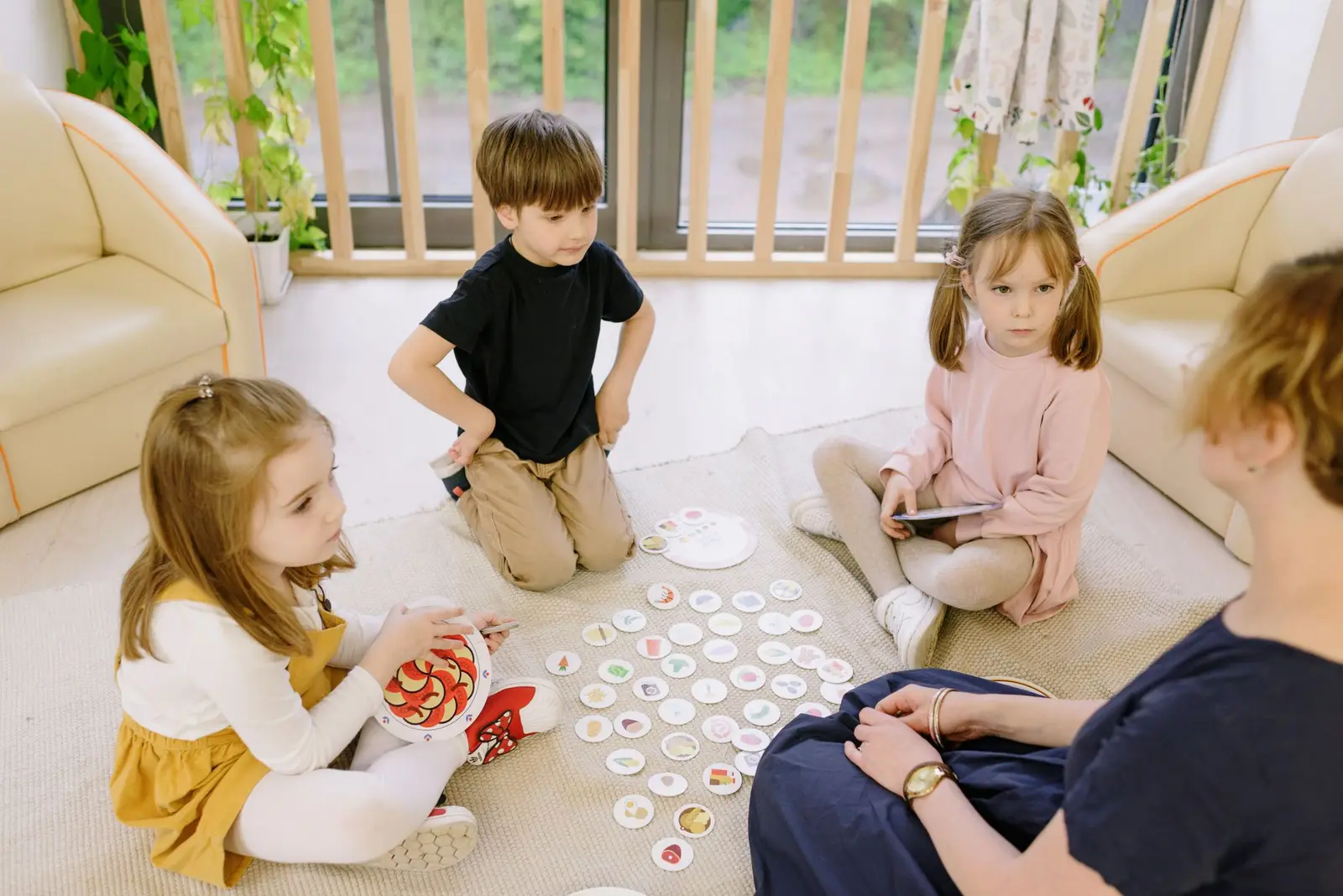
Young children playing a picture game on the floor with an adult
Photo: Ksenia Chernaya on Pexels
The short answer

Keep circle time short and predictable, with a visual agenda showing each part and when it ends. Offer clear seating spots and alternatives, like a chair or cushion, and build in movement and hands-on participation. Let children join for part of the time and build up. Visual supports and interactive activities help autistic children and the whole group.

Key takeaways
  • Keep it short with a visual agenda.
  • Offer clear spots and seating options.
  • Build in movement and hands-on parts.
  • Let children join for part and build up.

How do I make circle time work?

  1. Show a visual agenda: song, story, calendar, goodbye.
  2. Mark each spot with a carpet square or cushion.
  3. Start with a familiar song every day.
  4. Make it interactive: props, picture cards, turns.
  5. Add movement between parts.
  6. End on time, and show "finished".

Visual supports make the routine predictable.1

What participation options help?

Try
  • A chair or cushion instead of the floor
  • Joining for the first song, then building up
  • Holding a fidget
  • Answering by pointing to a picture
Skip
  • Requiring everyone to sit still the whole time
  • Long talks without visuals
  • Calling on a child without warning
Free printable: classroom visual timetablePDF · 2 pages · common school-day pictures, plus blank cards
Download Free printable: classroom visual timetable

What can I try this week?

0 of 3 done
Common questions

Short enough for the group to stay engaged, often 10 to 15 minutes for young children, with movement breaks.

Sources

  1. AFIRM (UNC Frank Porter Graham): Visual supports evidence-based practice brief. afirm.fpg.unc.edu
  2. National Clearinghouse on Autism Evidence and Practice: Research and resources. ncaep.fpg.unc.edu

This guide shares general information and our team's perspective, based on the sources above. Rules and services differ by country, region and school, so always check your local guidance and your organisation's policies. How we write our guides.

Was this guide helpful?
Share this guide with someone who'd find it useful
Listen

One small, useful tip a week

Practical ideas built on evidence-based practices, plus a free printable to start. Unsubscribe anytime.

We never sell or share your email.